INFINITY HUES · CREATE
How to make a colour palette from an everyday object
Sometimes you want to combine colours but do not know where to begin. A cup, an item of clothing or an image you like can offer a first selection without the search for a perfect combination.
The main idea
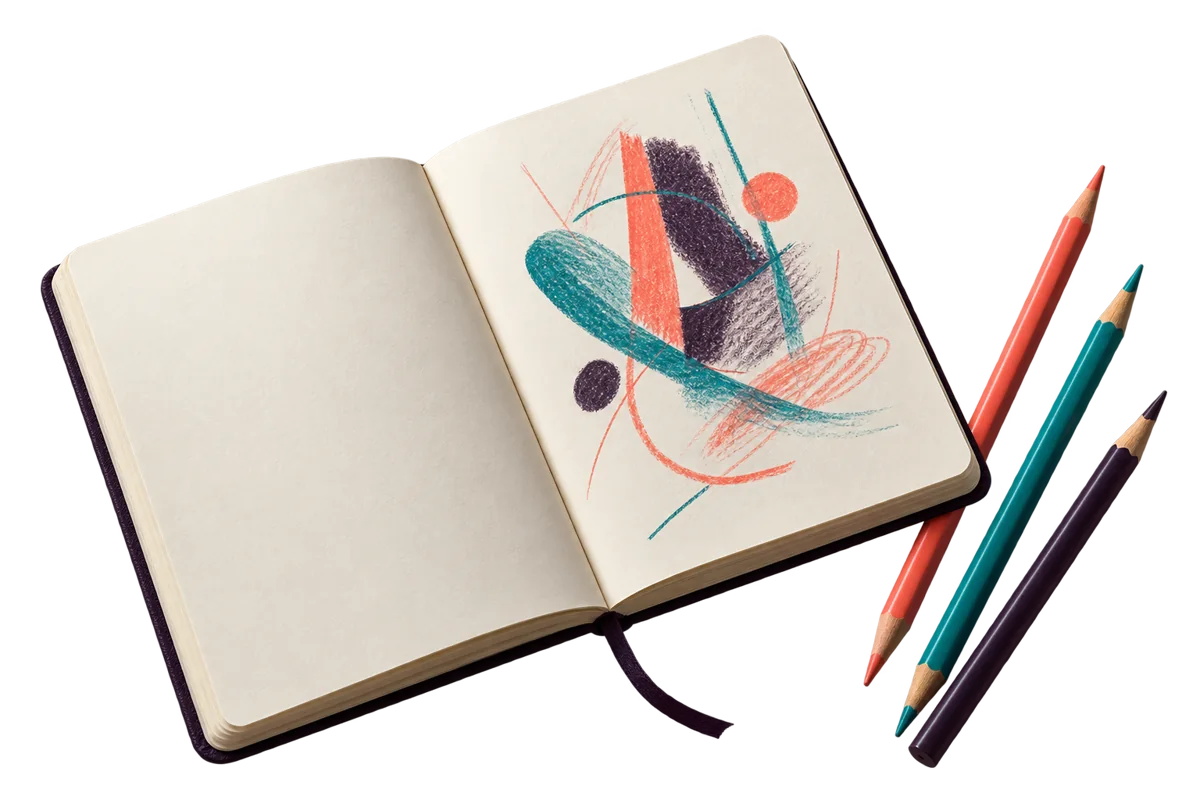
Choose an object, notice a few colours and make samples with what you have. Then try the same shades in different proportions and keep the combination you would enjoy using.
Choose something you want to look at
Find a nearby object with two or more colours: a patterned cup, a bag, a book or a fallen leaf. You could also use a photograph of your own. What matters is that you enjoy looking at it for a moment; it does not need to be a spectacular image.
Notice the lighter and darker areas and choose three or four shades. If you see many variations, start with the ones that catch your attention. You do not need technical names: “dark green”, “muted pink” or “the colour of the paper” are useful enough clues.
Make samples with your materials
On a separate piece of paper, draw small squares and fill each one with the pencil, marker or paint closest to your selection. If you do not have a similar shade, try another one you like beside the others. Your palette can take inspiration from the object without reproducing it exactly.
The paper colour is part of the combination too. Leave one sample uncoloured if you want to include that lighter space. If you are unfamiliar with a material or paper, test it separately first and follow the relevant instructions.
Change the proportions, not every colour
Divide a sheet into two rectangles and use the same colours in both. In the first, let one colour take up more space and keep the others for details. In the second, change the leading colour: for example, try a mostly blue area with small orange accents, then a mostly orange area with blue details.
Look at the two samples together. You may prefer one for a colouring page and the other for decorating a card. You can also change just one shade or make a third sample; you do not have to choose between the first two.
Take the palette onto a page
Try your selection on a simple pattern, a card or a small part of a colouring page. Before continuing, notice whether you want to keep those colours or introduce another. The idea is to explore how they sit together, not to fill the entire page at once.
If you want to save the idea, keep the samples with a note such as “mostly blue, orange details” or “try a lighter green”. Next time you will have a starting point that you are free to change.
If you would like to explore colour
Visit the public Chroma Shu website to discover our books. Each book’s exclusive resources remain in its reader-access area.
Chroma Shu